⚡ Key Facts – Machu Picchu
ℹ️ Strict daily limit; purchase only at official portal machupicchu.gob.pe. Circuit 1/2/3 prices differ slightly. (Fees verified 2024 – verify at official site before visiting.)
History of Machu Picchu
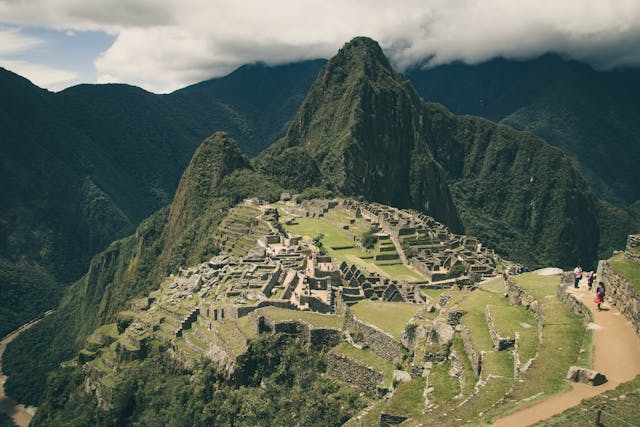
Machu Picchu was built by the Inca emperor Pachacuti around 1450 AD during the height of the Inca Empire. The site was inhabited for only about 100 years before being abandoned, almost certainly as a consequence of the Spanish conquest of the Inca Empire in the 1530s. The Spanish never found or recorded Machu Picchu, so it remained intact and largely hidden from the outside world. American historian Hiram Bingham III "rediscovered" the site on 24 July 1911, guided by local Quechua farmers who had lived near the ruins for generations. The site's purpose remains debated; most archaeologists now believe it was a royal estate or ceremonial centre for the Inca ruling class, housing around 750 priests, artisans and attendants. It was inscribed as a UNESCO World Heritage Site in 1983 and became one of the New Seven Wonders of the World in 2007.
Architecture & Design
Machu Picchu sits at 2,430 m above sea level on a narrow ridge between Huayna Picchu and Machu Picchu mountains. The site divides into an agricultural sector (terraced farming that also prevents landslides) and an urban sector (temples, palaces, plazas). The Inca used ashlar masonry: stones are cut so precisely with bronze tools and harder stones that not even a knife blade fits between them. The walls shift slightly during seismic events and return to position – a feature modern engineers study for earthquake-resistant construction. The Temple of the Sun features a window precisely aligned with the sunrise on the winter solstice. The Intihuatana stone is an astronomical clock that tracks the sun's position. The site's drainage system moves 70% of rainfall off the mountain within seconds, preventing erosion.
Travel Tips & Visitor Information
Fun Facts & Did You Know?
- No wheels were used in building Machu Picchu – all massive stones were moved up the mountain ridge using human labour, ropes, levers and ramps
- The Inca used no iron tools for stone carving – they shaped granite and limestone with harder stones such as obsidian and bronze chisels
- Over 172 plant species, including 90 types of orchid, have been catalogued within the Machu Picchu citadel
- The llamas at Machu Picchu are working animals, not tourist attractions – they graze the terraces and maintain the grass by preventing overgrowth
- Hiram Bingham's 1912 expedition removed approximately 4,000 artefacts to Yale University; Peru recovered the last pieces in 2012 after a century of negotiations
- The peak rising dramatically above the site is Huayna Picchu ("Young Peak") – not Machu Picchu mountain itself
How to Get There
Nearby Cities: Aguas Calientes (6 km), Ollantaytambo (40 km by train), Cusco (80 km by train)
Official Website: https://machupicchu.gob.pe ↗