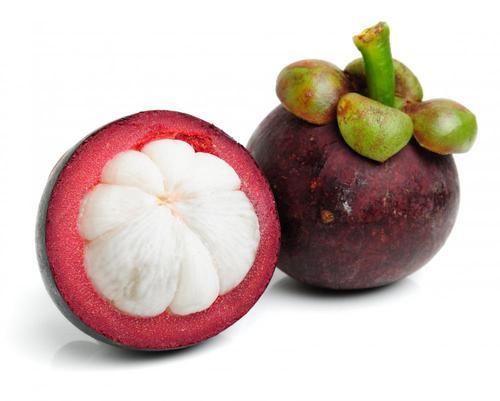
Purple Mangosteen - Thailand National Fruit
Fruit Information
Culturally, mangoes hold profound significance in many societies, particularly in South Asia where they feature prominently in religious ceremonies, festivals and traditional medicine systems like Ayurveda. The fruit symbolizes love, fertility and prosperity in various cultures and mango leaves are considered sacred in Hindu traditions. Modern culinary applications have expanded beyond traditional preparations to include innovative uses in international cuisine, smoothies, desserts and fusion dishes. Food technology advances have enabled the development of mango-based functional foods, supplements and cosmetic products, while traditional preservation methods like pickling and drying continue to be valued for their cultural heritage and practical benefits.
| Fruit Name | Purple Mangosteen |
| Scientific Name | Garcinia Mangostana |
| Country | Thailand |
| Continent | Asia |
| Fruit Season | Summer |
| Fruit Color | Deep Purple |
| Fruit Size | Small |
| Fruit Taste | Sweet-Tangy |
| Fruit Origin Region | Southeast Asia |
| Designation Year | 1980 |
| Peak Month | May-August |
| Economic Importance | Queen of Fruits Export |
| Cultural Use | Thai royal fruit, Traditional medicine |
| Processing Type | Fresh, Juice, Traditional medicine |
| Fruit Shape | Round with thick rind |
| Texture | Soft white segments |
| Nutritional Value | Xanthones, Vitamin C, Antioxidants |
| Storage Type | Refrigerated |
| Harvest Method | Hand picking when ripe |
| Shelf Life | 5-7 days |
| Climate Type | Tropical humid |
| Soil Type | Rich organic forest soil |
| Water Requirement | Very high |
| Tree Height | 15-25 meters |
| Flowering Season | September-October |
| Fruiting Age | 10-20 years |
| Yield Per Tree | 100-300 fruits |
| Export Countries | Thailand, Malaysia, Philippines |
| Import Countries | Singapore, Hong Kong, USA |
| Medicinal Use | Anti-inflammatory, Antioxidant |
| Festival Association | Thai fruit festivals, Royal ceremonies |
| Historical Significance | Queen of Fruits, Royal Thai fruit |
| Alternative Names | Mangkhut, Queen of Fruits |
Detailed Information
Cultivation & Origin
Mango cultivation has spread globally from its origins in the foothills of the Himalayas, with India remaining the largest producer, followed by China, Thailand, Indonesia and Mexico. The fruit exhibits remarkable diversity with over 1,000 named varieties, each offering distinct characteristics in terms of size, shape, color, flavor intensity and harvest timing. Modern mango production employs advanced horticultural techniques including grafting for disease resistance, drip irrigation for water efficiency and post-harvest treatments to extend shelf life and maintain quality during international transportation.
Nutritional Benefits
Nutritionally, mangoes are powerhouses of essential vitamins and minerals, particularly beta-carotene which the body converts to vitamin A, crucial for eye health, immune function and skin integrity. A single cup of mango provides over 100% of the daily vitamin C requirement, supporting collagen synthesis and antioxidant protection. The fruit contains unique compounds like mangiferin, a powerful antioxidant with anti-inflammatory and neuroprotective properties. Mangoes also provide digestive enzymes like amylase, which aid in carbohydrate breakdown and dietary fiber that promotes gut health and helps regulate blood sugar levels.
Economic & Agricultural Significance
The economic impact of mango production extends far beyond simple fruit sales, encompassing processing industries that create dried mangoes, juices, purees and various value-added products. Major producing countries have developed sophisticated supply chains involving specialized packaging, cold storage facilities and rapid transportation networks to deliver fresh mangoes to global markets. Climate change poses challenges to traditional growing regions, prompting research into heat-tolerant varieties and adaptation strategies. Sustainable farming practices are increasingly adopted, including organic certification, water conservation techniques and integrated pest management systems.
Cultural & Modern Applications
Culturally, mangoes hold profound significance in many societies, particularly in South Asia where they feature prominently in religious ceremonies, festivals and traditional medicine systems like Ayurveda. The fruit symbolizes love, fertility and prosperity in various cultures and mango leaves are considered sacred in Hindu traditions. Modern culinary applications have expanded beyond traditional preparations to include innovative uses in international cuisine, smoothies, desserts and fusion dishes. Food technology advances have enabled the development of mango-based functional foods, supplements and cosmetic products, while traditional preservation methods like pickling and drying continue to be valued for their cultural heritage and practical benefits.